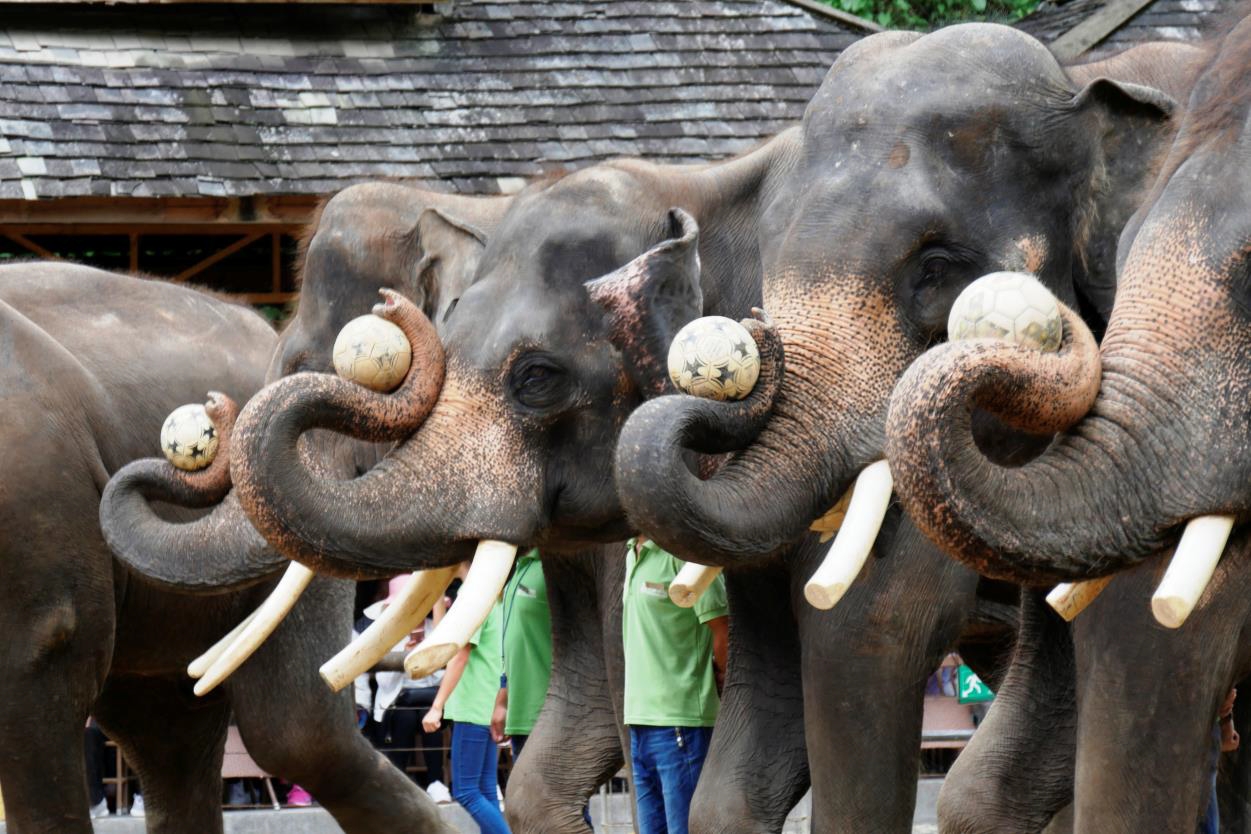
Open letters and Compilation of documents by Karl Amman (2020-06-21) –
Elephants already exported and in the process of being exported to China
While looking into the export of the elephants to Dubai Safari we encountered representatives of a Chinese company, from Yunnan, inspecting some 50 elephants they said they had under contract. The concerned mahouts stated that they had no copies of the contract with them, they were with the administration at Xayabouri. We met one lady who explained, in English, that she could handle all the export requirements.
The story we heard was the mahouts were paid U$ 900 a month to look after their elephants, with the Chinese company having a first option purchase agreement; they were inspecting their elephants regularly to see what additional training they had undergone. The final price was to be determined based on the abilities of the elephants and the tricks they could perform.
Purchase prices were again discussed, ranging from U$ 25 000 to U$ 50 000. There was never any indication that there was a legally binding loan agreement being agreed on, nor that there would be any hope that any of these elephants would ever return to Laos.
We had a party check this information out on the China end; it was all confirmed. Some 50 elephants were said to have been sent from Laos to China under these agreements, and based on media statements in China some of the end consumers paid up to U$ 250 000 per elephant; a nice markup.
When we went to Elephant Valley, near Jing Hong, we found that the performances were mostly with trained elephants from Thailand; the Laotian elephants were mostly at Wild Elephant Valley, with a fenced-in group of elephants. We learn that on weekends, up to 40 000 visitors entered the gates and the earnings potential on such weekends was up to U$ 2 million.
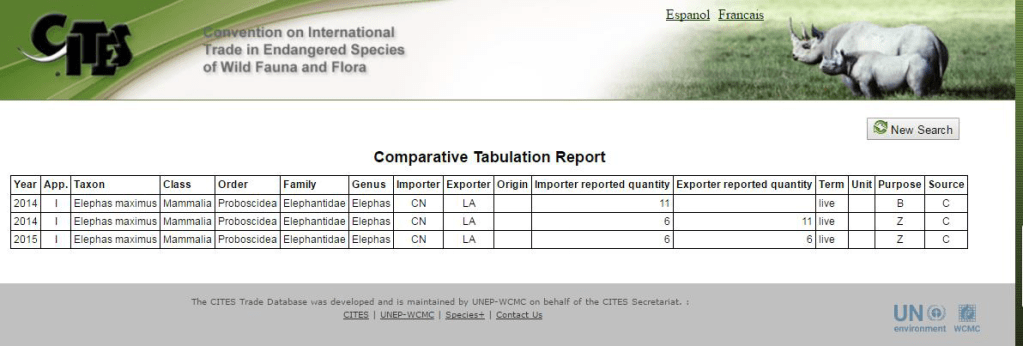
These exports were totally commercial transactions and a number of parties have already earned serious profits with these. In 2016, 11 elephants were exported and imported with CITES permits. We again established the reason why this could not have been legal, since these were commercial transactions; all Asian elephants are CITES I listed species, plus they didn’t come from CITES approved breeding facilities.
The CITES secretariat, in their 2017 mission report, stated that these exports were illegal. As such, these elephants are still the property of Laos. Laos, under Article VIII of the convention, can have them confiscated and repatriated to Laos.
China rents out its pandas, at a rumored rate of U$ 1 million a year, to various zoos around the world; the funding is supposedly going back to panda conservation.
Laos could agree to leave some of its elephants in China, at the facilities that have imported them illegally and propose a temporary loan agreement with specific rental amounts per year; the funds could then flow back to elephant conservation into Laos.
The illegal outright sale of these elephants for U$ 25-50 000 each is illegal under international laws and, according to the prime minister’s letter on the Dubai elephants, under domestic law also; basic law enforcement should be the highest priority item on the agenda, including stopping of any further such exports. But we documented 4 elephants presently at Boten, ready to be illegally taken across the border; the mahouts in charge state that some 30 went that route in 2017.
While some of the Chinese players involved in this seem to have reacted to the exposure of the scams by stating that the company in charge would build a U$ 40 million breeding facility for elephants at Xayabouri, there is no sign that any specific plans exist, nor that any kind of construction has started. This could be just another PR and window-dressing exercise Chinese wildlife trafficking companies are known for.
A fair income for a temporary rental of the elephants to Chinese zoos and safari parks, where they earn millions, could be used to take care of the remaining captive population of elephants in Laos, assuring acceptable animal welfare standards.
During the just completed CITES Standing Committee meeting in Geneva, a presented briefing document regarding the export of elephants from Africa to China established that Chinese zoos and safari parks are not adequately equipped to look after this species in a captive setting, and that any further such export plans should be put on hold. This, despite the fact that Southern African elephants are listed as CITES II and therefore commercial export is technically illegal.
However, the document illustrates, once more, that the opinion of policy makers and of the public in much of the world has moved on and now recognize that circuses, zoos and performance settings are not appropriate for animals like elephants, and should be phased out. Laos and China are currently moving in the opposite direction with their elephants, and there is considerable potential for push-back in form of similar type of reports concerning Asian elephant welfare in Chinese zoos, circuses and safari parks.
It will most likely impact the image of Laos as a tourist destination and as a country that takes its environment and wildlife seriously. This is also true for their attempts to turn the commercial tiger farms into tourist facilities, as it seems the Laotian delegation to the same CITES SC meeting has proposed. It is for the Laos authorities to decide if their natural heritage is worth to standing up for some basic principles, and if their elephants deserve the consideration of being seen as national and cultural assets.
Regards,
Karl Ammann
Dear Sirs,
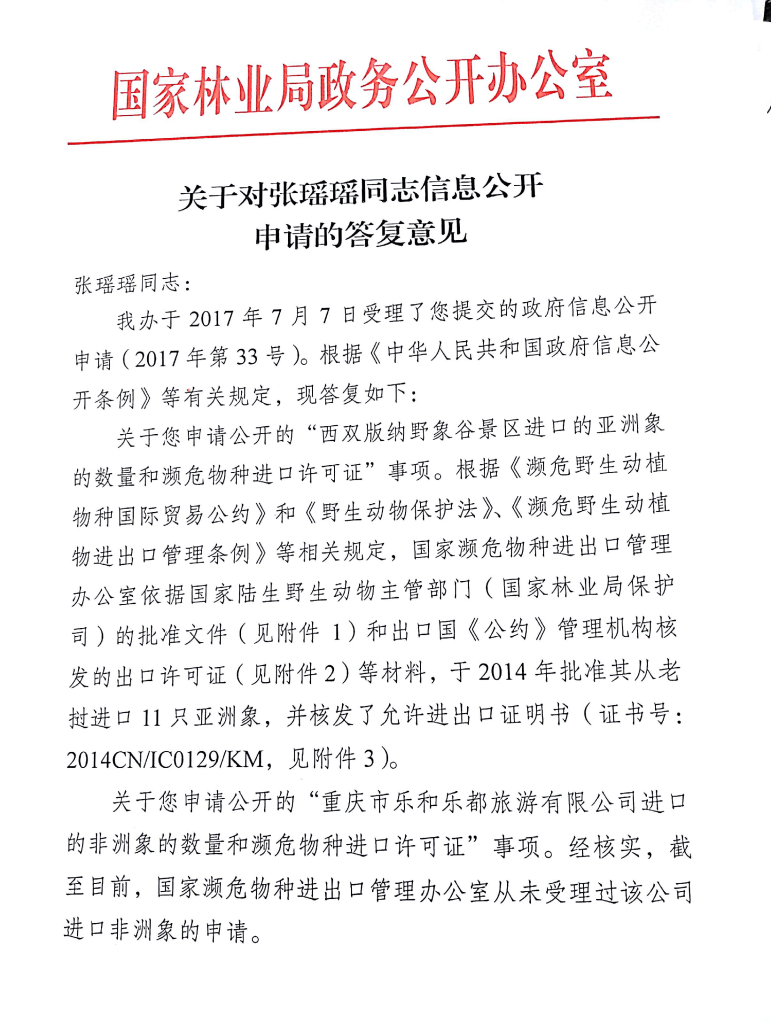
I am referring to the earlier e-mail, below, sent to CITES secretariat officials and other concerned parties. We have now secured the CITES import and export permits for the 11 elephants exported at the end of 2015 from Laos to the very establishment whose representatives are still continuing to acquire elephants in Laos (a partially government owned conglomerate based in Yunnan being the party negotiating at the Laos end) . These permits show:
- That the export permit was issued before the import permit.
- The import permit must have been issued right before the elephants actually left (so most likely no time for any kind of none detriment findings by the CITES scientific authority).
- Both permits list a CITES C source code (no CITES approved breeding facility for Asian elephants exists in Laos).
- The purpose code is B for China and Z for Laos (these elephants are being trained for performance in Laos and the facility in question is a 100% commercial operation).
- No indication that customs in Laos or China verified and confirmed the imports or exports on these permits.
- The permits for the other six elephants, listed as having been exported from Laos to China in 2015 were not supplied. The request under the public information act only yielded the export and import permit for the eleven but also established again that providing such documents is provided for under the national Chinese law.
- The attached letter from the Lao Prime minister making it clear that live export of elephants outside a limited loan arrangement is illegal under Laotian laws making all the relevant CITES import and export permits invalid.
The letter from the CITES MA in Kunming accompanying these permits states; “After verifying we allow your company to import 11 Asian elephants which are species on CITES I from Lao to feed and perform.”
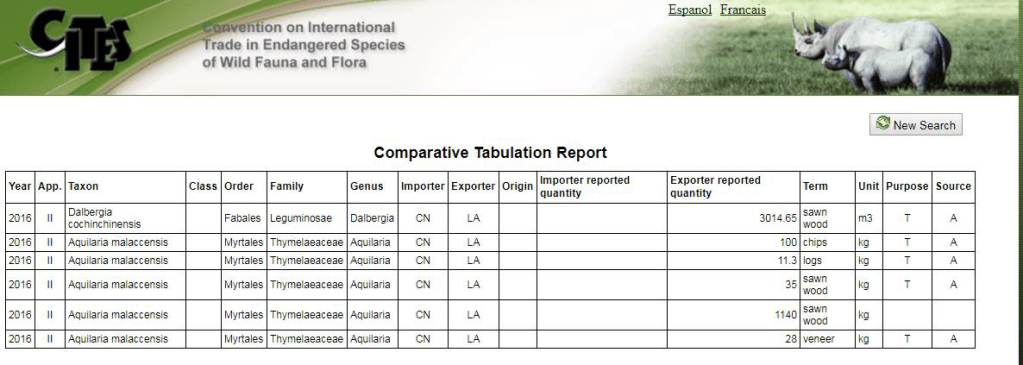
Since then, Laos have filed their trade data base returns for 2016 which shows no elephants having been exported to China in 2016. The attached analysis of news reports as well as the listing below make it clear that over 30 elephants potentially left Laos for China in 2016. The assumption has to be that getting invalid CITES import and export permits is no longer considered a requirement.
We documented that some 50 more elephants are presently under contract to one of these Chinese exporters, with them having the first option for outright purchase and export.
What this establishes, once again, is that the earlier C scam for the imports of apes by China has been extended to other species and might have evolved to a point where importers and exporters have gone so far as concluding that these transactions can now take place without any kind of CITES documentation.
Will the secretariat this time around push for Article VIII of the convention to be enforced and these pachyderms returned to their former owners in Laos and the parties involved in the trafficking investigated? That would finally send the kind of message which dealers in China might take seriously. By contrast, tolerating these illegal transactions and letting all of those involved to carry on with them with total impunity, in the CITES context, will only further encourage the illegal wildlife trade.
Regards
Karl Ammann
News about the import of the elephants:
1- Dongguan zoo,in Guangdong province, 2016.5 and 2016.11,12 elephants http://www.cqn.com.cn/zggmsb/content/2016-05/23/content_2947956.htm
2- Guizhou safari park, 2017.1,12 elephants, more than 20 million RMB http://www.gywb.cn/content/2017-01/20/content_5436231.htm
3- Changsha ecological zoo,2016.9,4 elephants http://hn.rednet.cn/c/2016/09/13/4083942.htm
4- Shanghai safari park,2014.8,4 elephants http://sh.sina.com.cn/news/b/2014-08-17/0805106403.html
5- Ningbo Youngor Zoo,2017.1,4 elephants http://n.cztv.com/lanmei/zjzs/12380121.html
6- Zhengzhou zoo, 2016.3, 2 elephants http://www.henan100.com/news/2016/588289.shtml
Dear Sirs,
We are at present working on a major feature length documentary on the wildlife trade and in this context have spent some time and resources investigating the trade in elephants. As you know, with Asian elephants there is none of the ambiguity of split listings of CITES I and CITES II classifications which exists for the African elephant.
Initially we looked into one specific transaction involving Dubai Safari which was planning to import some 16 elephants from Laos PDR. The transaction was eventually stopped by the attached letter from the Prime Minister while indeed the Emirates Cargo 747 was already on the tarmac in Vientiane.
We looked into the background of these elephants and met with several of the owners, as well as the local agent who arranged this sale. And indeed, as the PMs letter makes clear, these were not loan arrangements but outright sales of all the pachyderms in question. There were reports of the involvement of the Korean T&J company which seems to have initiated this transaction but not having paid all the moneys (bribes?) which were expected and that this was a major reason why the sale, in the end, was not completed.
While looking into this scenario we stumbled across two Chinese companies which are very actively involved in leasing elephants. They are signing 5 year agreements with elephant owners which also gives them a first option right to buy them (in the one case we saw the inventory taking of some 30 of these elephants). The mahout/owners stated that the corresponding contracts were held by the relevant provincial government authorities and the Chinese contractor, and they did not have a copy. However they recounted some 20 elephants having left last year via the Mohan – Boten border between China and Laos and several others are said to have already left this year. Names were provided of Chinese parastatal companies being involved in these transactions and there are rumours of some 50 elephants already in some kind of a storage/quarantine set up near Beijing.
Having consulted CITES experts on the legality of these exports it is clear that:
- That Laos does not have a CITES approved breeding facility for the commercial export of a CITES I listed species
- The transactions were all commercial with various reports in the Chinese media confirming that the zoos and safari parks in China acquiring these animals were paying up to 10 times the price owners in Laos charged the Chinese buyers/ exporters
- While the CITES trade data for 2016 does not seem to be available yet there are the usual discrepancies for the declared imports and exports and the overall declared figures do not match the information from various parties on the ground
- The elephants are all declared as coming from captive bred stock but besides there being no CITES approved captive breeding facility of elephants in Laos, the mahouts kept repeating the story of owners of female elephants who want offspring, but do not want to pay a stud fee, tying their female in a piece of forest where there are still some wild male elephants and then waiting while their cows are mated by wild males. This clearly does not comply with the CITES stipulation that any such captive breeding has to be under totally controlled conditions where the parent stock cannot be in doubt.
- There are no indications of the CITES Scientific authorities of China or Laos having prepared any of the required None Detriment Findings required for such exports and imports.
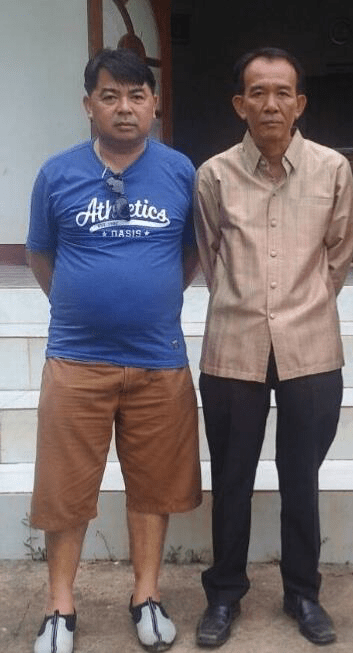
As such it has to be assumed that all these past and proposed future transactions are illegal under the CITES Convention rules and that China as the importer of these pachyderms would have an obligation to reverse these imports under Article VIII of the Convention, and prosecute the traders/traffickers (attached some images of some of the parties involved).
Having produced the documentary ‘Destination China’ for ZDF Television in Germany we established the exact same pattern of supposedly importing some 150 chimpanzees and 10 gorillas – all declared as captive borne and declared by the Chinese CITES Management Authority with source code C (captive borne) on their import permits long before the Guinean CITES authorities issued any export permit classifying them as captive borne.
It seems no lessons have been learnt in the context of this previous scam and it is now being happily repeated with other species.
We understand that a CITES technical mission is about to embark on a visit to Laos and it is hoped that this information, concerning the live exports of elephants, will be put on the agenda and the Laotian authorities can be briefed on their right to ask for the return of these national assets.
At the same time this message provides various parties with the right to respond to these allegations, which will most certainly be featured in this upcoming documentary.
Yours sincerely
Karl Ammann
Live Elephant Trade report 2017
The following information was gained from attending a site reported to be trading elephants in Xayabouri, speaking with an informant and a Lao agent, Mr Salerm Xaioudom, who assisted with the planned shipment of elephants to Dubai for a Korean company, T&J.
This information will be used to supplement the live elephant trade file.
Information was received that the Chinese company, Yunnan Mekong Group had asked local mahouts to attend at a location outside Xayabouri town with their elephants. This occurs approximately once per month.
According to the mahouts there are 55 elephants on contract to the Yunnan Mekong Group although this may include the 20 reportedly transported to the companies Yunnan based Wild Elephant Valley attraction during 2016. The group pay $900pm for each elephant and mahout as a retainer and gives them first option to purchase the elephants. This is supposed to be to build up a stock of performing animals for the new elephant spectacular in Xayabouri owned by the company.
No construction has commenced in the last two years and there is doubt that this will occur. It is unlikely tourism in Xayabouri would be able to support an operation that size and it may be a front for brokering elephants to entertainment venues in China.
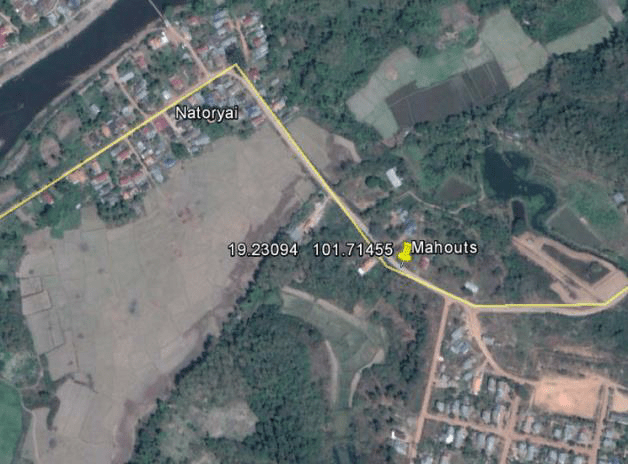
At 9:30am on the 13th of June 2017, the following information was observed and recorded:
The location was a quiet area outside of Xayabouri town. 26 elephants were observed with their mahouts. It was expected that representative from the Chinese Yunnan Mekong Group would attend with potential buyers. Two Koreans joined the group of Chinese and were seen checking the condition and training of the elephants. The Koreans were observed on a flight from Vientiane to Luang Prabang the previous day. At the end of the viewing the Koreans selected a young elephant and were seen handing money, which was confirmed as 1,000,000 THB, to one of the Chinese in attendance.
It is possible that the Koreans may be connected to T&J Company. This company is contracted to supply animals for the Dubai safari and have an office in Vientiane with the representative called Mr Won. The company is connected to a Lao company called Rama Construction.
Korean buyer 
Another Korean buyer 
Chinese male who received the money from the Koreans 
Chinese male of Korean decent. He appeared to be the deal broker 
Lao- Chinese interpreter (Ph- 0309174232)

Veomany Vongxay is the local administrator who handles the administration for buying the elephants.
Mob- 02059243835/02054030206
She is employed by the Department of Information, Culture and Tourism (DICT) , Xayabouri https://www.facebook.com/veomany.vongsay
Vongxay did not attend this sale unlike previous sales but was contacted by phone on this occasion and asked information about purchasing elephants. She stated that to purchase an elephant the buyer must contact the Yunnan Mekong Group who has the first option on sales. She advised to visit Thongmixay district where there were elephants still available not contacted by YMG. She can assist with arrangements for permission papers to take them over the Boten border into China.

Ex T&J representative Mr Salerm Xaioudom – ph 02097337475 
Sakhone Keosouvanh – ph 22228091
The following information was received from the mahouts:
- Price for the elephants average at 1,300,000THB. A mother and calf was priced at 4,000,000THB on the day.
- Yunnan Mekong group, T&J and Rama construction are connected in business trading live elephants. According to Mr Salern, the owner of Rama construction was Sakhone Keosauvanh. Sakhone is a partner in the Vinasakhone wildlife trading company. His daughter is said to operate a shipment company out of VTE and is involved with transport of the elephants. Sakhone was often present at the sales but was not liked by the mahouts as he cheated them.
- Elephants are trucked to the border. They are then walked through the Lao border crossing using a “livestock trail” to cross the border. The elephants are recorded as livestock. They are then picked up on the China side and continue by truck.
- The ex PM had given permission for 40 elephants to be sold to China. The new PM has stopped this, so it is much harder to conduct trade, especially from Xayabouri where the focus so mahouts were discussing taking the elephants to Oudomxay or Luang Namtha.
Other findings: The Yunnan Entry/Exit Inspection and Quarantine Bureau reported that 25 Elephants were imported via the Boten/Mohan border between 2015- May 2016. This is not reflected in CITES permits.
Chinese media tracking was conducted to find evidence of live elephants being exported to China from Lao PDR. See figure 1, below
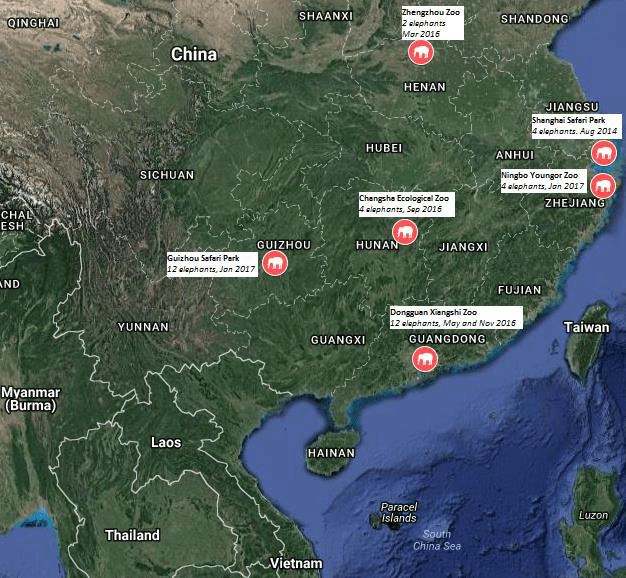
Six zoos reported to have imported 38 elephants. For detailed information: 2014- 4, 2016- 18, 2017- 16. These transactions were not reflected in the CITES trade database. See figure 2, below
1、Dongguan Zoo,in Guangdong province, 2016.5 and 2016.11,12 elephants http://www.cqn.com.cn/zggmsb/content/2016-05/23/content_2947956.htm
2、Guizhou safari park, 2017.1,12 elephants, more than 20 million RMB http://www.gywb.cn/content/2017-01/20/content_5436231.htm
3、Changsha ecological zoo,2016.9,4 elephants http://hn.rednet.cn/c/2016/09/13/4083942.htm
4、Shanghai safari park,2014.8,4 elephants http://sh.sina.com.cn/news/b/2014-08-17/0805106403.html
5、Ningbo Youngor Zoo,2017.1,4 elephants http://n.cztv.com/lanmei/zjzs/12380121.html
6、Zhengzhou zoo, 2016.3, 2 elephants
The price quoted that the Guizhou Safari Park paid for elephants was US$245,000 each. This is a significant profit for animals costing $30,000 in Lao PDR.

The Yunnan Mekong Group
This group own the following companies involved with elephant tourism.
- Xishuangbanna Yexianggu Tourist Attraction Co. Limited Yexianggu is a tourist attraction on the edge of the Mengyang Nature Reserve. Yexianggu” (野象谷 means the wild elephant valley and is based in Xishuangbanna).
- Pu’er Nation al Park Tour Co. Limited The company is managed by the Pu’er Sun-River National Park.
- Yunnan wild animal park Co. Limited This company has connections with the Kings Roman Group. One of the head keepers/butcher, Mr. He, spent 18 months at the casino in Bokeo establishing the tiger breeding.
These three companies’ business all include animal performances and they all belong to Yunnan Mekong Group. The Yunnan Mekong Group belongs to the Kingland Group.
On August 14 2017 a media report stated that the Sino-Lao Tourism Investment and Development Company (manager Yian Yu) was in the process of building an Elephant tourism village in Xayabouri and was leasing 50 elephants from local mahouts.
Additional exporters:
- October 26, 2017 – Information was received from WCS China that Soutchai Travel have applied for a CITES permit to export elephants from Laos into China. The General Manager is Soutchai Vongthongchit. Soutchai Travel runs an elephant camp outside of Vientiane in Ban Sikeut. On the 28/10/17 six elephants were observed at the location.

- November 2017 – Information was identified through government letters that another unknown export company was negotiating to purchase the 16 elephants. These elephants were originally being sent to Dubai but the transaction was stopped when the PM issued an order. A letter dated Auust 14 2017 was sent from Mr Outtama Chanthakoumane, Pantavon import/export company, to the Xayabouri provincial forest inspections to ask for permission to inspect the 16 elephants. This was approved. A letter dated August 22 2017 was sent from the District office of forest inspections in Thongmixay district, Xayabouri. They are asking Pantavon Import and export company for funds to take care of the elephants so that they remain in good health. There is obviously a negotiation to purchase the elephants by an export company.
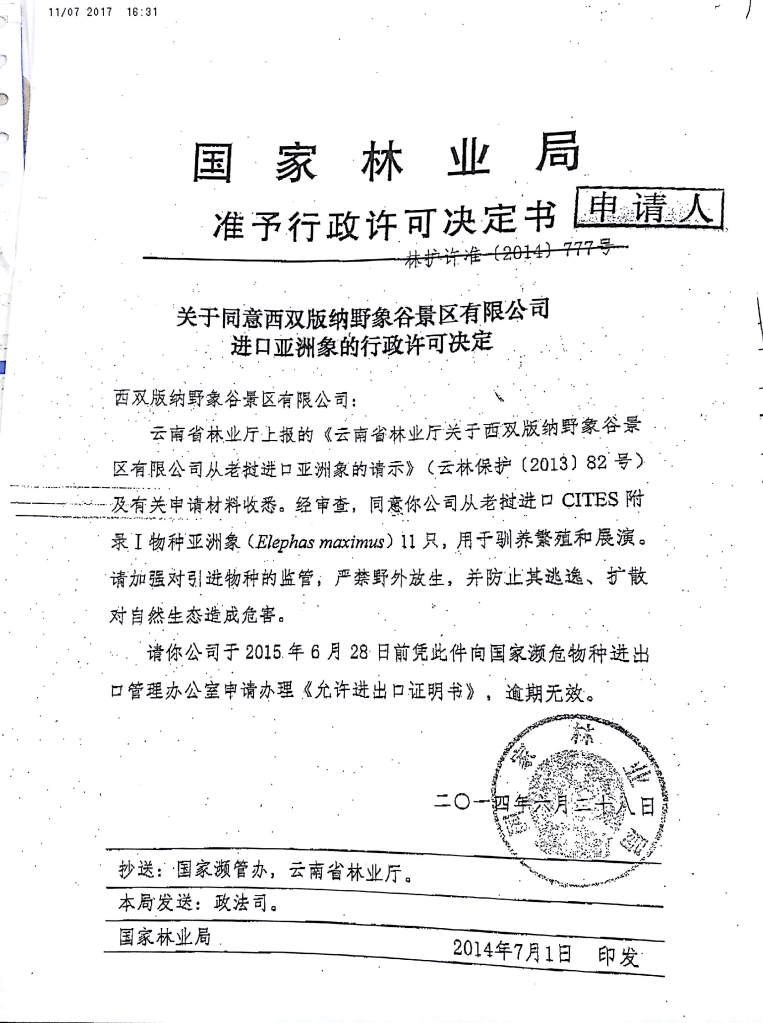



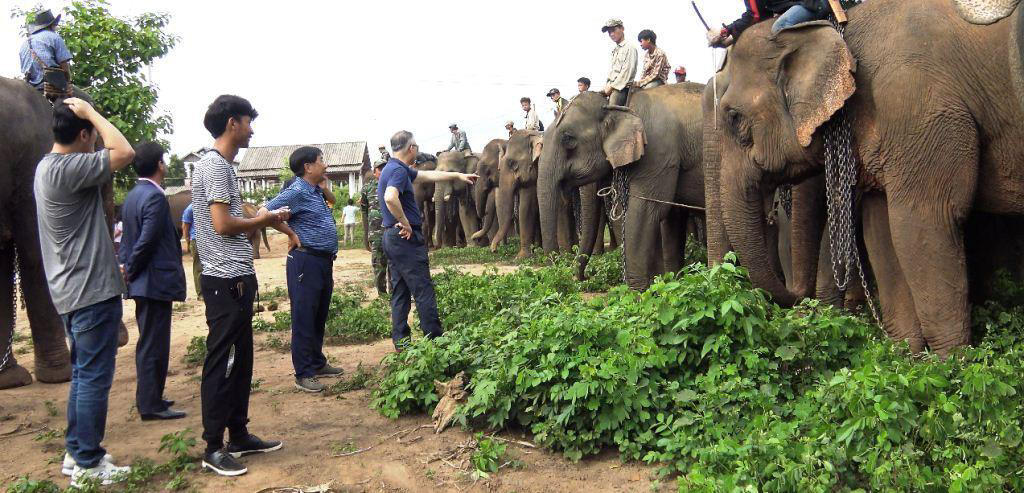

敬启者,
我指的是我们在云南濒危物种贸易公约办公室会议,讨论大象进口到中国的问题。下面是我在去年获得一些初步证据后发给各方的报告。
我知道,对于林业警察来说,主要问题不在于CITES的技术和许可文件,而是在这些进口环境下侵犯国家法律。我认为,所有这些进口都侵犯了国内法和国际法(见下面的推理概述)。根据CITES公约第VIII条,这种非法进口意味着:
•动物仍然是它们来自的国家的财产,在这种情况下,老挝(根据贷款/租赁协议的情况)
•有关动物应被没收
•进行非法进口的当事方应受到起诉
•如果可能或要求将动物归还原产国。
我绝对不怀疑,如果任何中国大熊猫都应该从中国非法出口,相关执法机关将坚持本条(八)的各个方面正在执行。
CITES公约的缔约方都同意修改其国家立法,以符合CITES规则和条例的要求。就中国法律而言,我不熟悉这些国际义务的适用范围。然而,有许多标准清楚地表明这些出口不合法,现在应根据第八条的规定处理。我相信中国的相关执法机关必须考虑到这一切,不能将CITES公约的违规和违规行为视为涉及CITES文件部门的内部事宜。在世界上许多地方,相关的,经常是伪造的和非法的“濒危物种公约”进出口许可证可以以数万美元的价格转手,不能排除这种情况发生在这些大象出口和进口的情况下。因此,这也是中国国家法律要求执行的问题。
在所附文件中记载的2014年11只大象出口和进口的情况下:
•在处理任何出口许可证之前,必须签发CITES进口许可证。在这种情况下,进口许可证于2014年12月2日发布。相应的出口许可证于2014年9月13日发布。
•如果任何国家法律在获取和交易有关动物方面受到侵犯,则不得签发出口或进口许可证。老挝总理关于向迪拜出口的建议信明确表示,根据老挝的国家法律,大象的销售和出口是不可能的
•亚洲象是CITES我列出的物种,根据CITES规则,不得出于商业目的出口或进口。但是,这些证据代替了老挝的前所有者记录解释销售交易,收到的金额以及这些销售的条件。中国的进口机
构都将这些动物用于动物园环境中的展览,这些动物园以任何商业和利润为导向(在大象谷收集的信息表明,4000名游客通过该设施花费平均50美元,非常商业化。
•这将出现一系列动物园,然后以相当可观的利润交易这些大象(参见中文新闻稿)。虽然在老挝购买的大象的平均价格约为25,000美元,但所报的销售价格却是这个数字的几倍。在云南与一家动物园的运营商交谈时,我们被告知,要在中国购买一头大象,并清理所有相关文件,并提供交货,可以将价格提高至400万人民币(约合60万美元)。附加文件显示贵州林业野生动物园2016年进口了12头大象,我们参观了并且只发现了五头进口动物。 他们有三只不能再用于表演的老大象,因此需要有一些基本训练的新鲜青少年。毫无疑问,这个动物园购买了12个作为投机交易的一部分,以相当大的价格倒卖剩余的动物。这些交易几乎不会更具商业性

•所附的CITES出口许可证将其分类为“C”,意思是俘虏。老挝没有CITES批准的圈养养殖设施,因此无法出口任何被捕的大象。虽然许多人生活在囚禁环境中,但前业主告诉我们,大多数想要婴儿的大象老板不愿意支付学费,并将他们的女性绑在含有野生男性的森林中。然后这些将与雌性交配 – 因此,对于大多数这些大象甚至母公司都不知道。
•根据CITES公约,此类交易必须是合法的,进口缔约方和出口国必须让其CITES科学当局做一个无害的调查,确定这些出口对任何野生人口会产生什么影响,再加上交易的合法性。如果中国濒危野生动植物种国际贸易公约科学当局花了五分钟时间检查濒危物种公约在老挝为大象饲养的设施,他们会发现没有,因此当时应该停止出口和进口。不要介意其他国际法律受到侵犯以及所有这些交易涉及的商业化程度。
•在CITES贸易数据中,这11只大象的出口和进口被列为目的代码B,用于中国在进口许可证方面的繁殖,而老挝则列出了与Z相同的目标代码。

•许可证列出西双版野象谷度假村作为进口商(出口商是在万象注册的贸易公司)。这个野生象谷是云南省的主要旅游景点之一,据说是在山谷中观看野生大象,所有迹象表明这些大象确实不是野生的,而是被围成一片大片的森林。这似乎是这些大象中的一些已经结束,而有些可能已经被交易到其他设施。我们看到一组三只不包含成人,因此这不会是一个正常的野生大象分组。
•在相应的节目中,大约有7只成年大象每天表演四次。该组织包括两名年轻人,其中有一位是来自老挝的。
•显然(与过去的黑猩猩和红毛猩猩一样),似乎没有中国动物园中的大象的种公牛书籍数据库,并且没有通过微切片控制(尽管看起来大多数老挝大象都带有微芯片)。
•中国在公布CITES贸易数据时列出了11个“进口”品种。虽然这些大象中有些可能有一天会繁殖,但在野外的山谷中,这再次不是任何一种CITES注册和批准的繁殖设施的一部分。当然,进口的主要动机纯粹是商业化的,显然有很多游客希望看到年轻动物。正因为如此,许多这样的动物园设施通常鼓励繁殖,以便能够向支付大量费用的游客展示婴儿和年轻人
因此,上述问题涉及“合法进口”的11头大象,这些大象的进出口许可证有缺陷。然而,老挝的大象老板和mahouts说2015年到2017年间有多达100只动物出口到中国。虽然大部分经历了莫汉边界,有些还有许可证,有些则没有,但也有关于森林的信息。官方边界允许贩卖任何商品 – 甚至是大象(我们在Mong Lah – Daluo观察到同样的模式)。
下面的电子邮件于2017年8月发布到了一系列相关部门。2017年底,CITES贸易数据信息被放到了中国相关网站上,宣布仅在那一年进口50头大象。毫无疑问,这是为了预先解决很多疑难问 题,并试图建立某种形式的法律背景以支持广泛的非法贸易活动。我相信电子邮件和附加文件引发了突然宣布进口50只动物。
有趣的是,老挝并没有像11号那样宣布它们是出口的,所以假设必须是这些动物没有一只获得了两年前11年使用的阴暗进口或出口许可证。
我们在上海进口商的母公司湄公集团和在经营大象谷的景洪金孔雀集团办公室打电话,询问相关问题,但没有人有权回答。然而,我们被告知我们会被回电,然后有人会回答相关问题。我们从未接到过这个电话。
2017年在老挝Xayabouri多次访问期间,我们曾三次与云南湄公集团/金孔雀集团的代表会面,他们正在检查合同规定的50头大象。根据相关业主,他们已经与该组签订了租赁和首选购买协议,并且每月为Mahout和大象支付900美元。
每只大象都是按照特定的标准进行培训的,这些标准在将它们用于中国表演时非常重要。 当我们第一次向中央老挝当局通报所有这些情报时,云南湄公集团/金孔雀集团的反应是宣布他们将为这些在老挝的大象建立一个4000万美元的养殖和保护中心。在最近的这次访问中,他们似乎完全放弃了这一计划,并表示万象出台了具体的新立法,这将使这种持续的非法贸易变得不可行。当时这个项目被放弃,他们拖欠业主和mahouts支付两个月的工资和租金/培训费(约90,000美元),而不是支付它们,他们将已经购买的两头大象作为补偿包的一部分直接交给了他们。
因此迹象显示,老挝方面关于大象活出口的事情正在发生变化,但没有迹象表明中国正在出现同样的情况,动物园和野生动物园已成为这些公司和有价值动物的大利润中心正在获得数百万美元的收益(几年前,这涉及非洲从非洲进口超过100只黑猩猩 – 所有人都宣称为俘虏,但又没有一只是被捕的)。同一组织还从南非进口了11头犀牛,这些犀牛基本合法,现在在昆明野生动物园,有的在普尔附近的一个设施。虽然根据南非法律,这些出口基本上是合法的,但它们只是去动物园,这些动物园被认可为国际认可的动物园协会的一部分,并为实地犀牛保护项目做出贡献。没有迹象表明这些标准中的任何一个适用于这种情况。再一次,根据南非国家法律,这将成为非法行为,这再次意味着CITES的出口或进口许可证都没有颁发。
总的来说,我确信这些交易涉及到很多腐败和犯罪行为,中国执法机构应接受彻底调查并适用CITES公约第八条的义
问候 卡尔·阿曼
Dear Sirs,
I am referring to our meeting at the Yunnan CITES office to discuss the import of elephants into China. Below is the report I sent to various parties last year after some of the initial evidence became available.
I understand that for the forestry police the main issue is not the CITES technicalities and permit documentation but the infringing of national laws in the context of these imports. I believe both national and international law have been infringed on with all these imports (see outline of reasoning below). As per Article VIII of the CITES convention such illegal imports mean:
- The animals remain the property of the country where they came from, in this case Laos (as it would be the case under a loan/rental agreement).
- The animals in question should be confiscated.
- The parties which conducted the illegal imports should be prosecuted.
- If possible or requested the animals should be returned to the country of origin.
I have absolutely no doubt that if any Chinese panda should ever be illegally exported from China, the relevant enforcement authorities would insist on every aspect of this article (VIII) of the convention being implemented.
The Parties to the CITES convention have all agreed to adapt their national legislation to conform with the requirements of the CITES rules and regulations. I am not familiar to what extend these international obligations have been adapted as far as the Chinese laws are concerned. However there are a wide range of criteria which make it clear that these exports could not have been legal and should now be dealt with under the stipulation of Article VIII. I believe the relevant enforcement authority in China has to take all this into consideration and cannot consider none compliance and infractions of the CITES convention as an internal matter concerning the department dealing with CITES documentation. In many parts of the world relevant and often falsified and illegal CITES import and export permits change hands for ten thousands of dollars and it cannot be excluded that this happened in the context of these elephant exports and imports. As such this would also be a matter of Chinese national law requiring enforcement.
In the context of the export and import of 11 elephants in 2014 which are documented in the attached documents:
- CITES import permits always have to be issued before any export permit is processed. In this case the import permit was issued on Dec. 2 2014. The corresponding export permit was issued on 13/09/2014.
- No permits for export or import can be issued if any national law has been infringed on in obtaining and trading the animals in question. The attached letter from the Prime Minister of Laos concerning the propose exports to Dubai make it clear that the sale and export of elephants is not possible under the national laws of Laos
- The Asian elephant is a CITES I listed species and under CITES rules cannot be exported or imported for commercial purposes. However the evidence is in place of former owners in Laos going on record explaining the sales transactions, the amounts they received, and the conditions of these sales. The importing institutions in China all use these animals in displays in zoo settings which by any account are highly commercial and profit oriented (information collected at elephant valley indicate that up to 4000 visitors go through the facility spending an average of U$ 50 resulting in a very commercial setting.
- It would appear a range of zoos then trade these elephants on at a considerable profit (see some of the attached Chinese news releases). While the average price for the elephants bought in Laos was around U$ 25 000, the sales prices quoted were a multiple of that. Talking to a zoo operator in Yunnan we were told that to buy an elephant in China, cleared with all the respective documentation in place and delivery, could bring the price up to 4 million RMB (or some U$ 600 000). While attached documentation shows that Guizhou Forestry Wild Zoo imported 12 elephants in 2016, we visited and only found five of the imported animals. They have three of the older elephants which can no longer be used for performances and hence the need for fresh youngsters with some basic training. There is little doubt that this zoo bought 12 as part of a speculative transaction reselling the remaining animals at a considerable mark up. These transactions could hardly be more commercial.
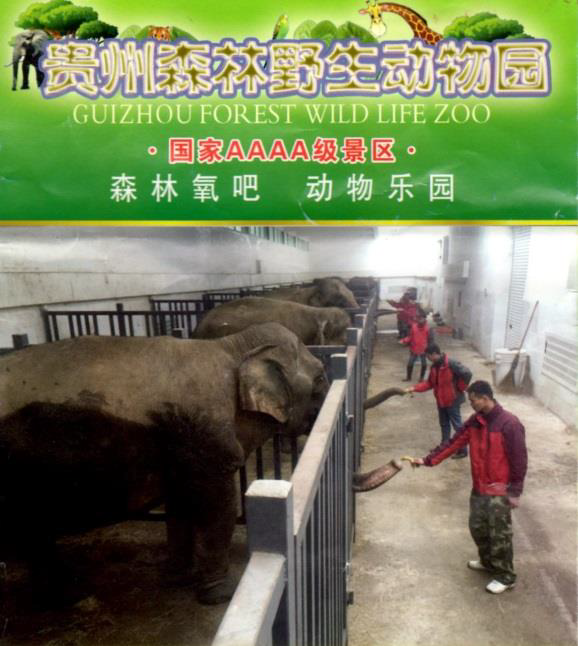
- The attached CITES export permit for the 11 classifies them a ‘C’ meaning captive borne. Laos has no CITES approved captive breeding facility and as such would not be in a position to export any elephants as captive borne. While many live in captive settings, the former owners told us that most elephant owners wanting babies would not want to pay stud fees and so tied their females in forests which contain wild males. These would then mate with the females – so for most of these elephants even the parent stock would not be known.
- For such transactions to be legal under the CITES convention the importing Party and the exporting country have to get their CITES Scientific Authorities to do a none detriment finding to establish what impact these exports would have on any wild population, plus the legality of the transaction. If the Chinese CITES Scientific Authority had spent five minutes checking CITES approved breeding facilities in Laos for elephants, they would have found that there are none and as such the export and import should have been stopped at that point. Never mind that other international laws were infringed on and the level of commercialization involved in all these transactions.
- In the CITES trade data this export and import of the 11 elephants is listed with a purpose code B for breeding by China in the import permit while Laos lists the purpose code for the same group as Z.

- The permits list Xishuangbaan Wild Elephant Valley Resort as the importer (the exporter being a trading company registered in Vientiane). This Wild Elephant Valley is one of the key tourist attractions in Yunnan province offering supposedly the viewing of wild elephants in a valley with all indications that these elephants are indeed not wild but fenced into a large piece of forest. This seems to be where some of these elephants have ended up while some might have been traded on to other facilities. We saw one group of three which contained no adult and as such this would not be a normal wild elephant grouping.
- In the corresponding show there were about 7 adult elephants performing four times a day. The group included two youngsters of which we were told one came from Laos.
- Clearly (as with the chimpanzees and orang-utans in the past) there seems to be no stud book database for elephants in Zoos in China and no control via micro chipping (although it would appear most Laotian elephants came with microchips).
- China in its return for the CITES trade data lists the 11 as having been imported for ‘breeding’. While clearly some of these elephants might one day breed, in the wild valley setting this is once again not part of any kind of CITES registered and approved breeding facility. Plus of course the major motive for the import was purely commercial and clearly having young animals are what a lot of visitors want to see. Because of this, breeding is generally encouraged by many such zoo establishments to be able to show babies and youngsters to visitors who do pay large amounts to see them.
So the above relates to the ‘legally imported’ 11 elephants which were sent with defective import and export permits. Elephant owners and mahouts in Laos however spoke of up to one hundred animals having been exported into China between 2015 and 2017. While most went through the Mohan border, some with permits and others without, there is also information concerning a forest trail next to the official border which allows for trafficking of any commodity – even elephants (we have observed the same pattern at Mong Lah – Daluo).
The e-mail below went out to a range of relevant authorities in August of 2017. Late in 2017 the CITES trade data information was put on the relevant web site listing China as declaring the import of 50 elephants for that year alone. I have little doubt that this was to pre-empt a lot of difficult questions being asked and to attempt to establish some kind of legal background underpinning a wide range of illegal trade activities. I believe that the e-mail blow and the attached document triggered this sudden declaration of an import of 50 animals.
Interestingly however Laos did not declare them as exported as with the case of the 11, so the assumption has to be that none of these animals went with the shady import or export permits which were used for the 11 two years earlier.
We called at the offices of The Mekong Group – which is the parent company for the above importer, and the Golden Peacock Group in Jinghong which operates the Elephant Valley set up – and asked relevant questions but there was nobody with the authority to answer them. We were however told we would be called back and somebody would then be made available to answer relevant questions. We never received this call.
During several visits to Xayabouri in Laos in 2017 we met representatives of the Yunnan Mekong Group/ the Gold Peacock Group on three occasions while they were inspecting up to 50 elephants they had under contract. According to the relevant owners they had signed a lease and first option purchase agreement with this group and were paying U$ 900 a month for the mahout and elephant.
Each elephant was meant to be trained to specific criteria which would be important when using them for performances in China.
When we first informed the central Laos authorities of all this intelligence, the reaction of the Yunnan Mekong Group/The Gold Peacock Group was to announce that they were going to build a U$ 40 million breeding and conservation centre for these elephants in Laos. On this latest visit it seems they had totally abandoned the plan, with indications that there had been specific new legislation coming out of Vientiane which would make this continued illegal trade less feasible. At the time this project was abandoned they owed the owners and mahouts back salary and rental/training fee for two months (some U$ 90 000) and instead of paying it they handed over two elephants they had already purchased outright as part of a compensation package.
So indications are that things are changing on the Laos side with regards to the live export of elephants however there are no indications that the same is happening in China, with zoos and safari parks having become big profit centres for some of these corporations and valuable animals are being acquired to the tune of millions of dollars (a few years ago this involved the illegal import of over 100 chimpanzees from Africa – all declared as captive borne when again none were). The same group has also imported 11 rhinos from South Africa which were largely legal and are now at the Kunming Wild Animal Park and some at a facility near Puer. While these exports were largely legal according to South African law they are only meant to go to zoos which are accredited as part of a recognized international zoo association and contribute to an in situ rhino conservation project. There is no indication that either of these criteria applies in this context. Again, that would make it illegal under South African national laws which once again should have then meant no CITES export or import permit were issued.
Overall I am convinced that there have been a lot of corrupt and criminal acts involved in these transactions and the Chinese enforcement authorities should accept the obligation to thoroughly investigate and then apply Article VIII of the CITES convention.
Regards
Karl Ammann
 The world of Karl Ammann